
Mais Nítido
A mentoring platform that pairs people by compatibility.
The challenge
Corporate training programmes deliver standardised content that rarely connects to the reality of any individual professional. The project started from a question: how do you enable knowledge exchange between professionals in a way that is light, personalised and worth the time it requires?
The scope was an MVP for running mentoring inside companies, drawing on mentors from within and outside the organisation. Unlike a project that concludes with a set of recommendations, this one had to operate in a real environment.
Process
The product had to serve two audiences with different interests. HR signs the contract and needs to justify the investment. The professional taking part wants something applicable to their own career.
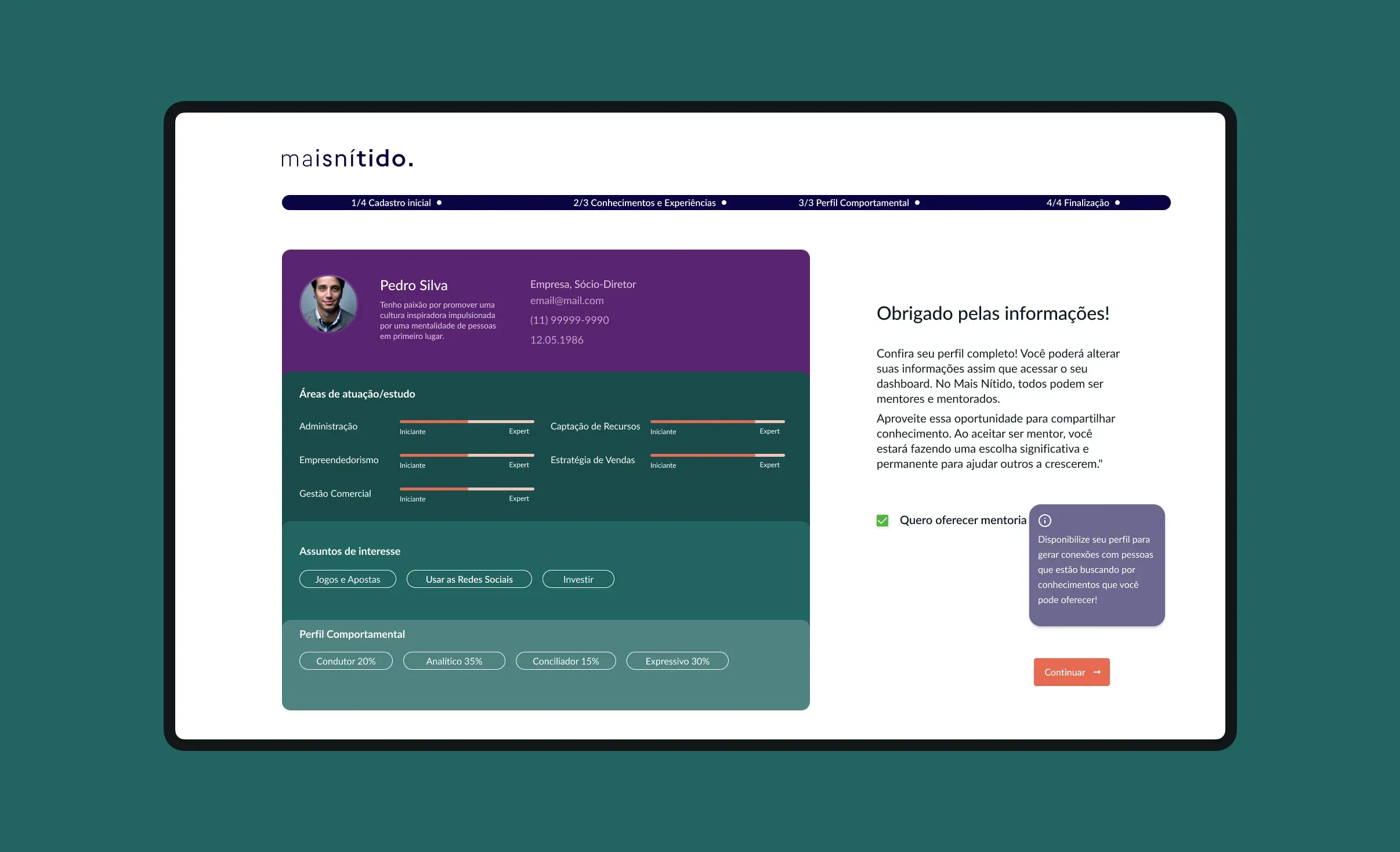
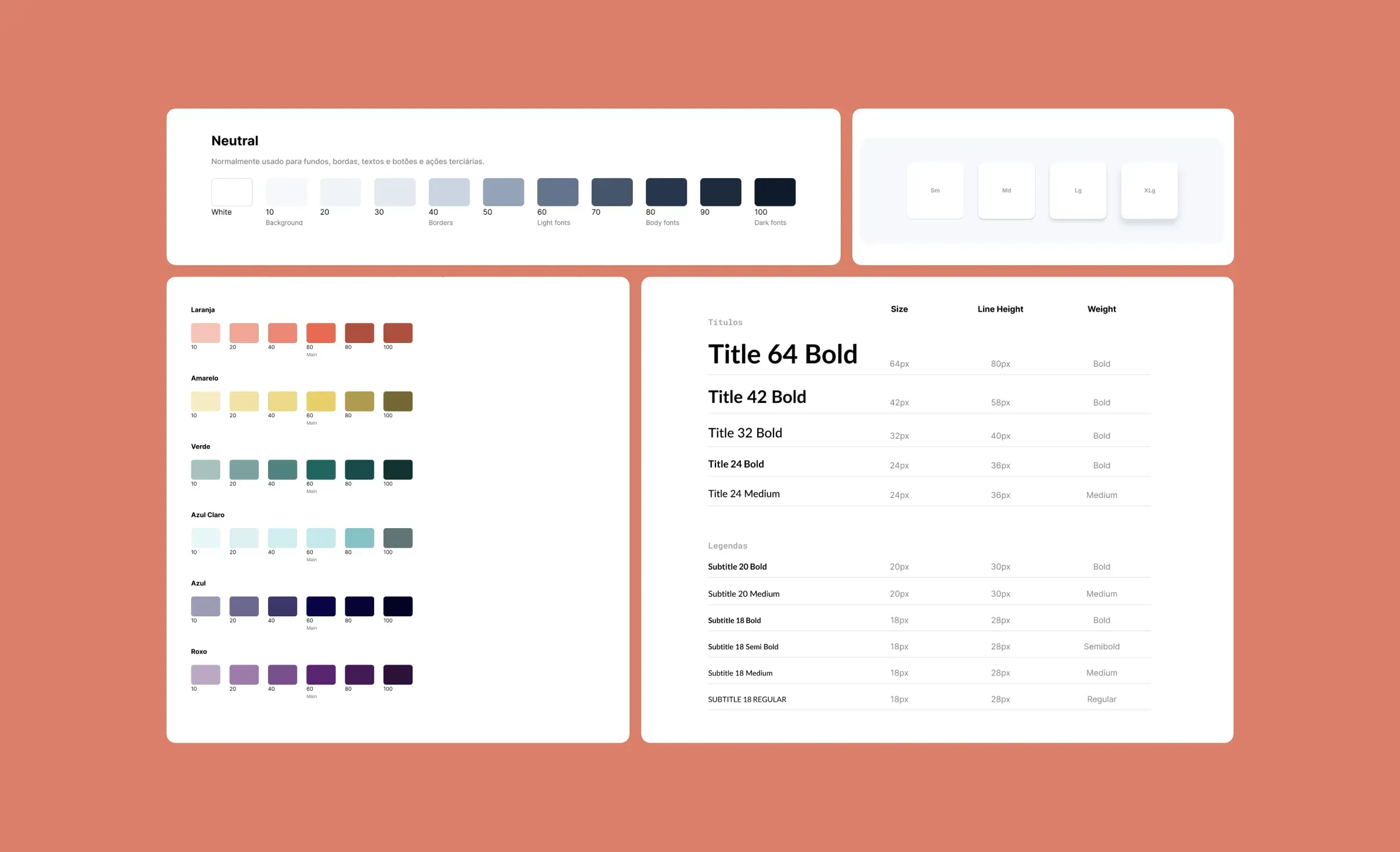
I ran in depth interviews with around fifteen people, including HR and technology professionals and people already mentoring through informal channels, complemented by an online survey to widen the sample. The findings shaped the flows, the screens and the product style guide.
Validation used two formats with distinct purposes. Moderated sessions over Google Meet captured what people were thinking as they worked through the product. Microsoft Clarity captured what they did unobserved, which is what confirmed whether the flows held up in real use.
Research insights
- When a company brings in mentoring, the manager typically arrives with the outcome already defined, whether that is sales performance or engagement. The programme is then shaped around that expectation, and the needs of the mentee become secondary.
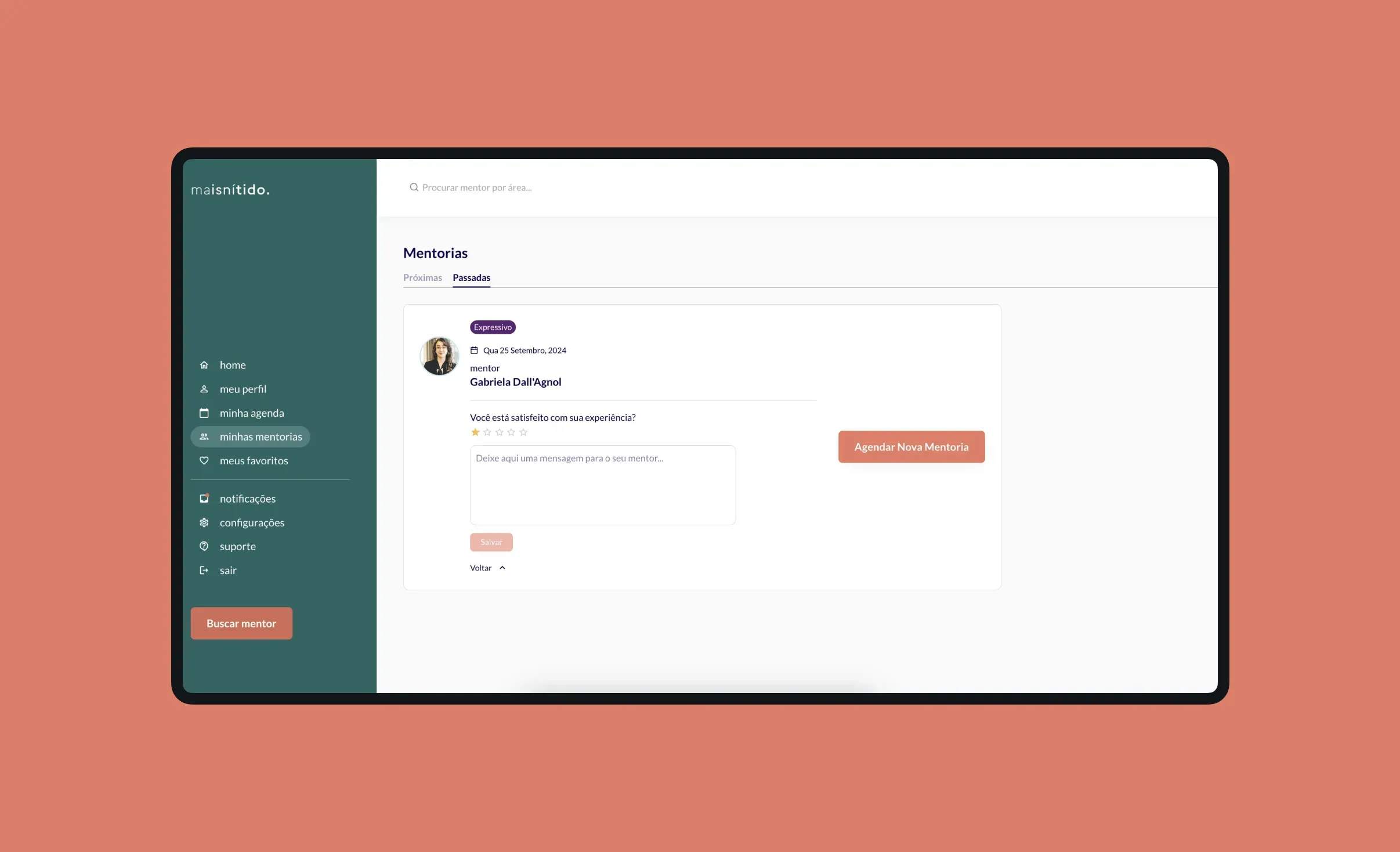
- Both HR and the mentee need visibility into progress as it happens, each for different reasons.
- The connection between the mentee challenge and company strategy has to exist, but in a form that can be applied day to day.
Goals
Match the right people
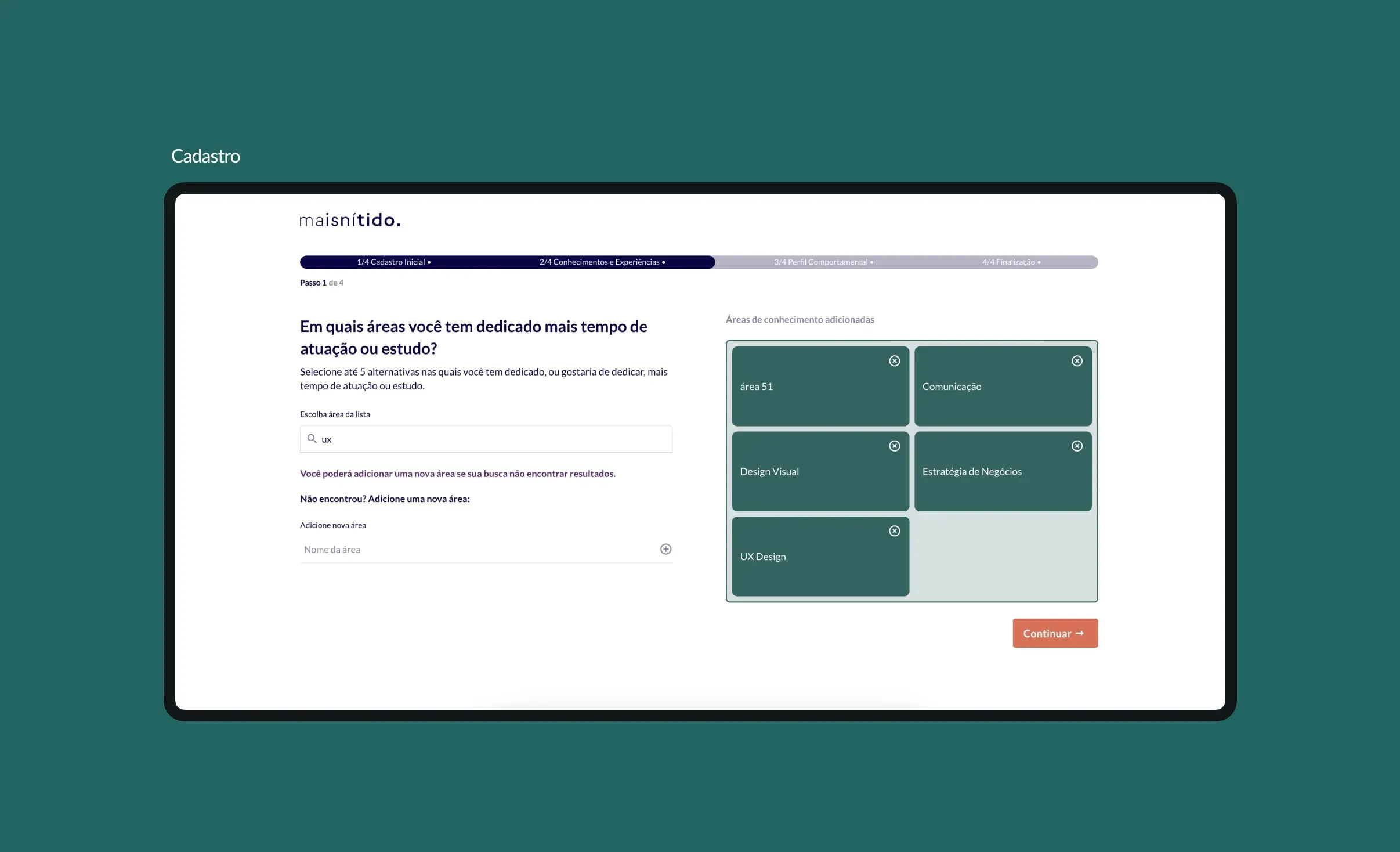
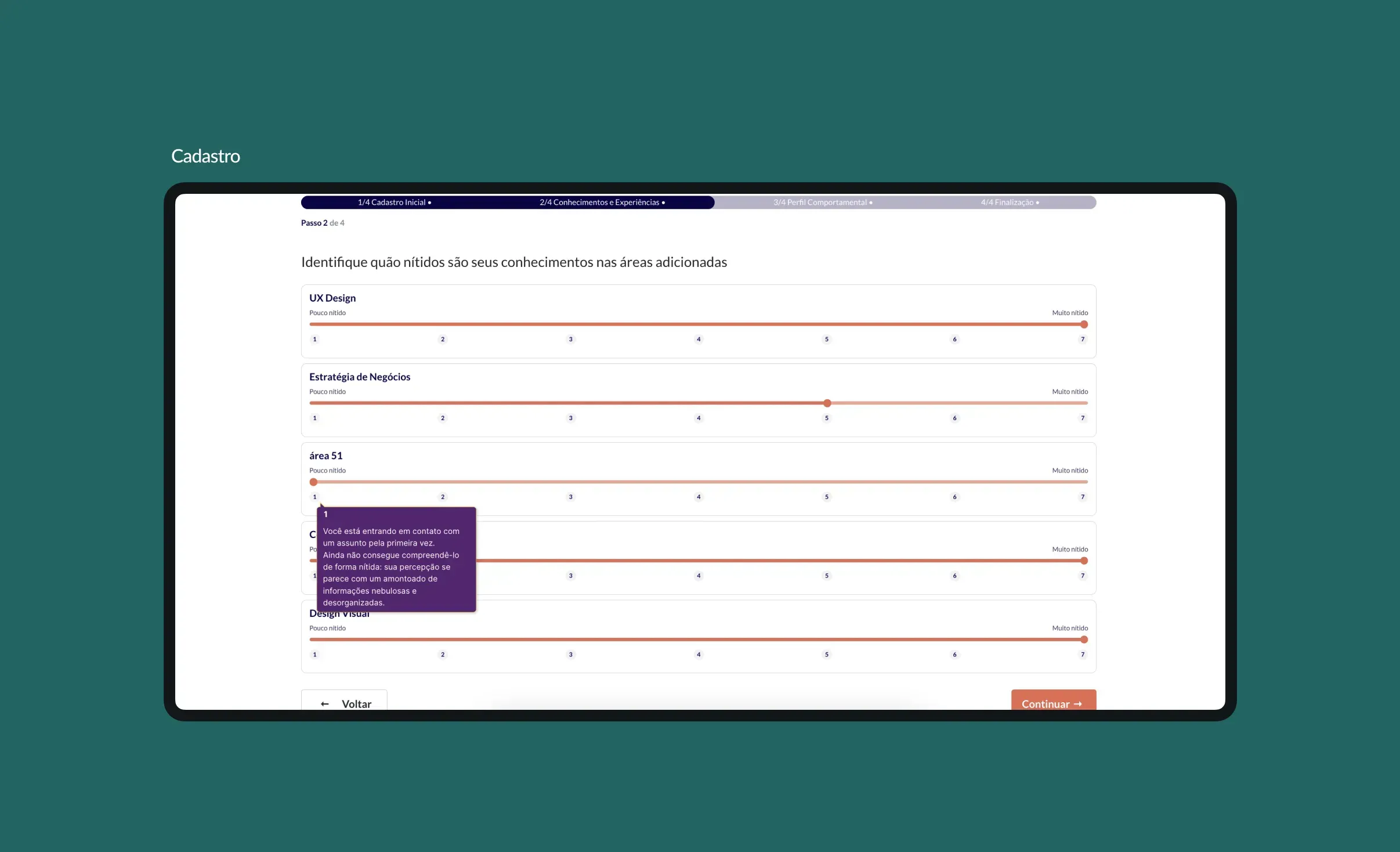
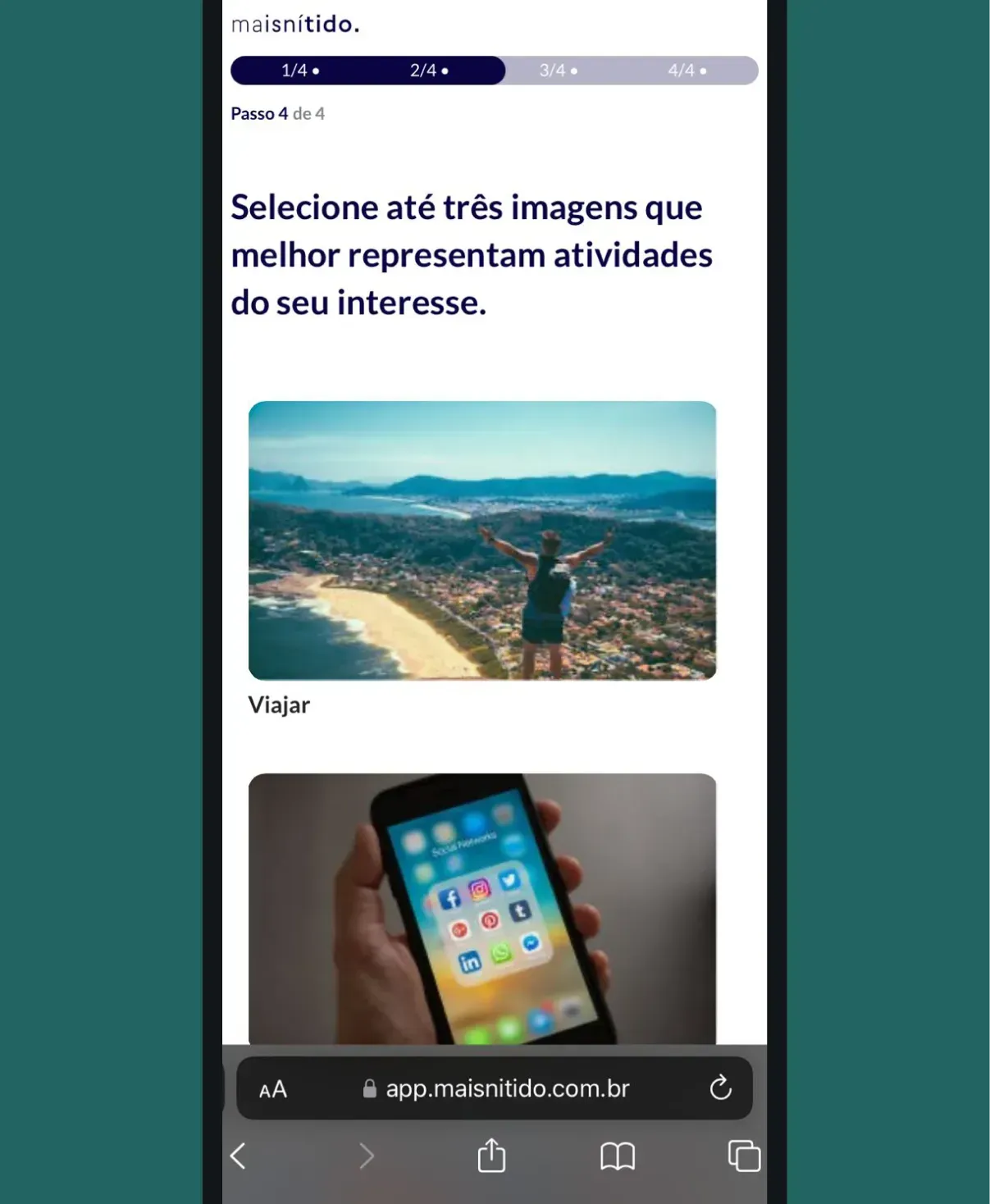
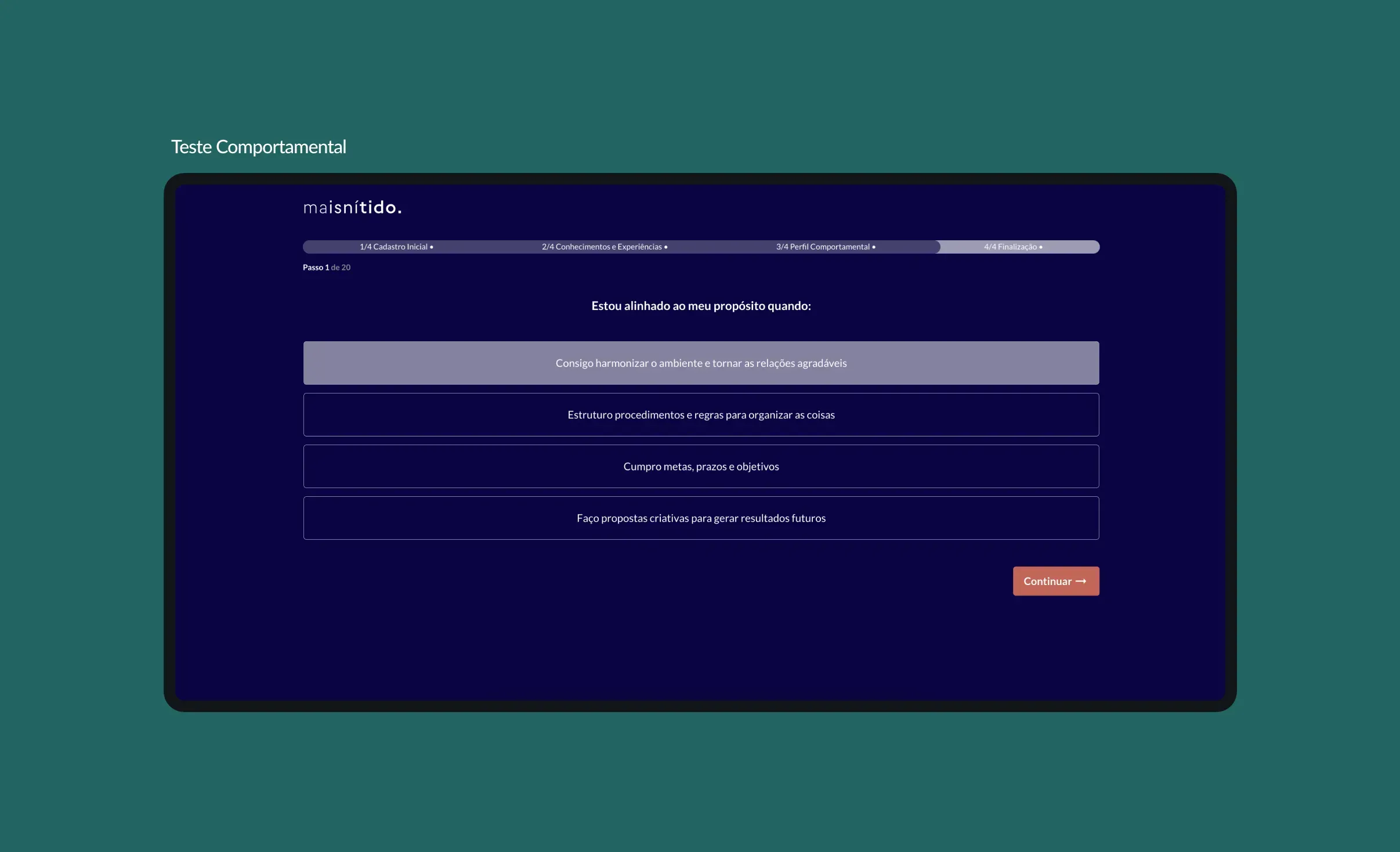
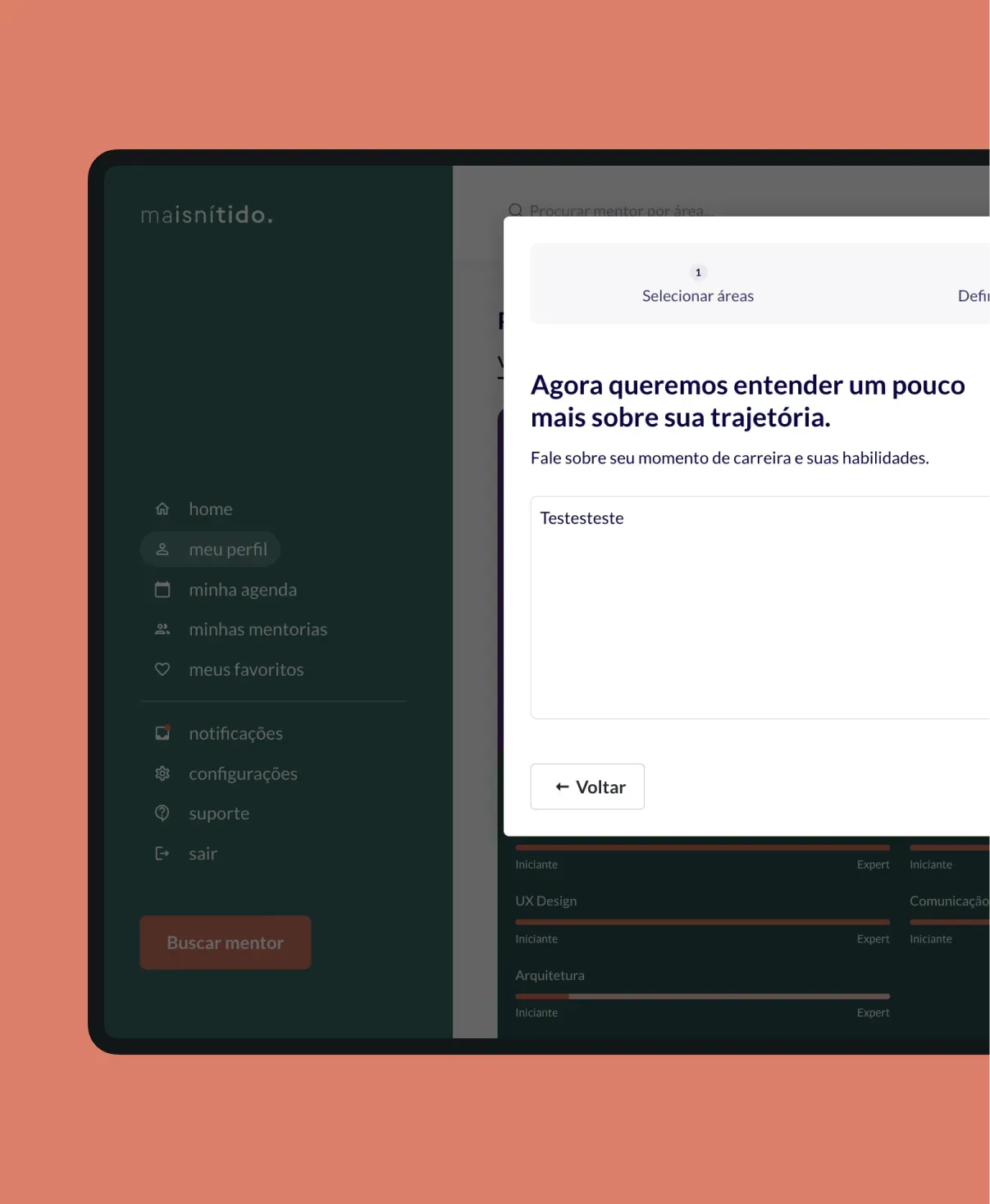
Map working style, goals and needs through a set of key questions, so that pairs are formed from genuine compatibility rather than administrative assignment.
Make mentoring feel like career growth
Position learning as a benefit the professional gains, rather than training imposed by the company.
Encourage people to be both
Allow the same employee to act as both mentor and mentee, drawing on expertise the company already holds internally.
Project decisions
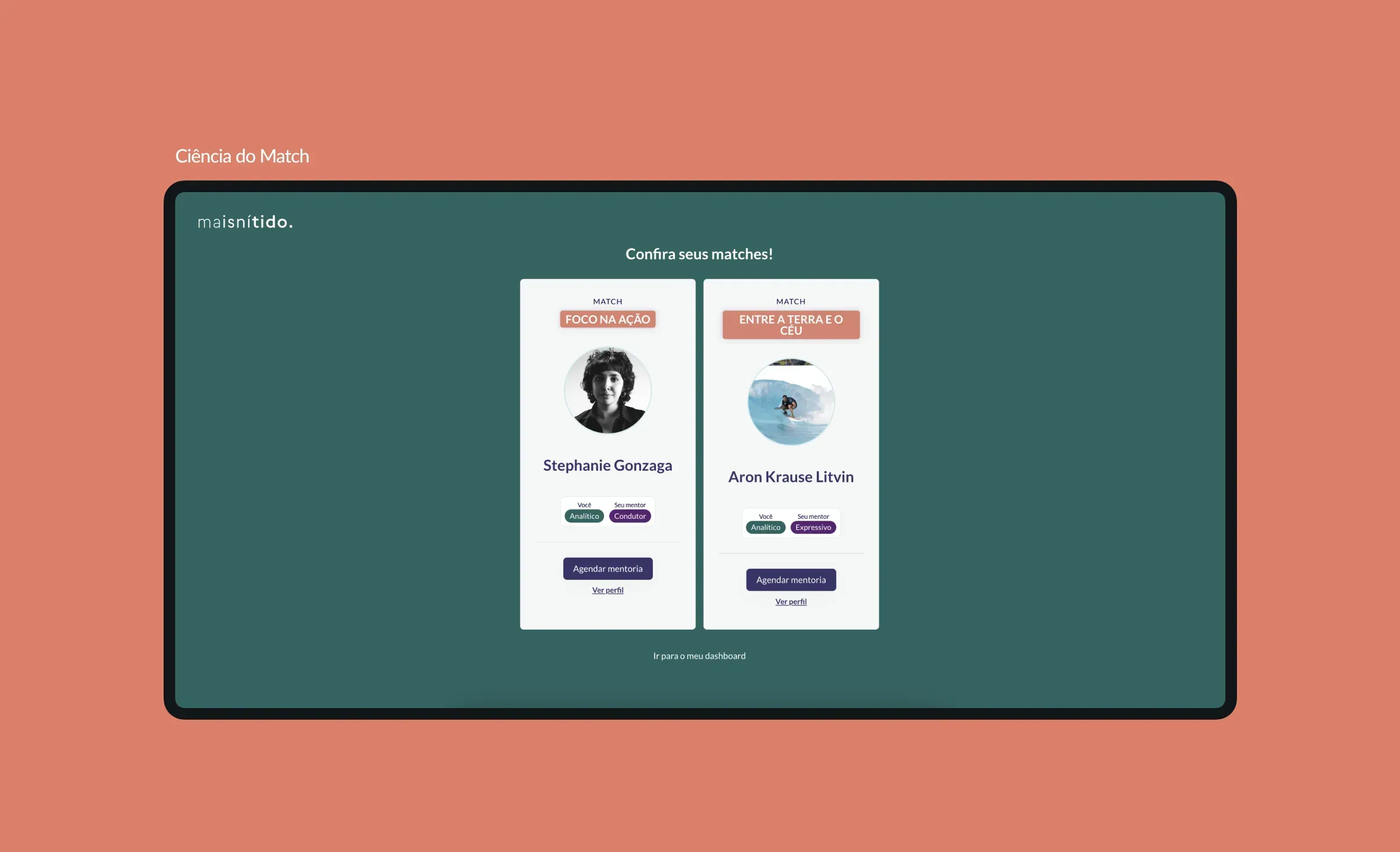
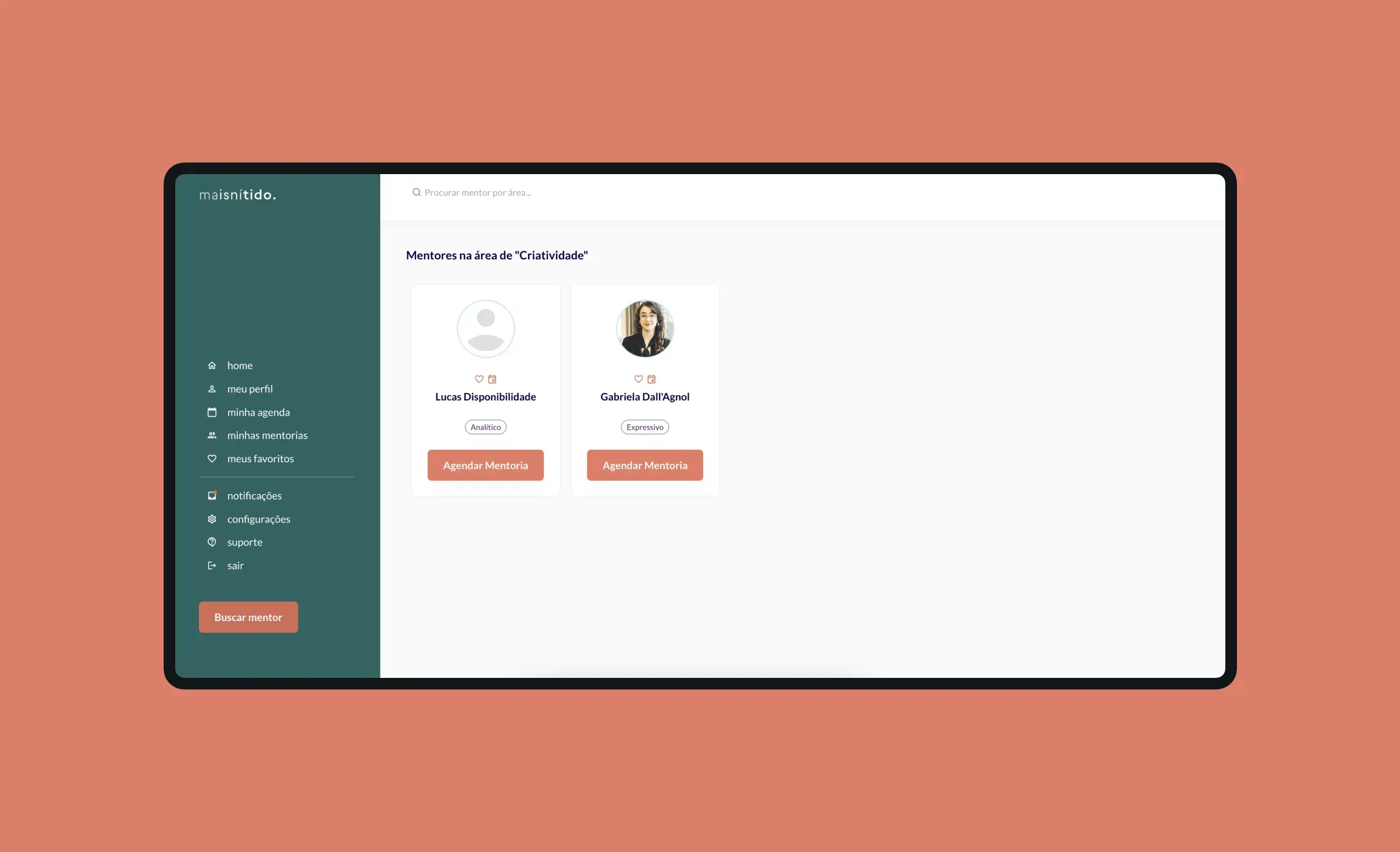
The first research finding exposed a tension that shaped the product. Those who pay for mentoring and those who take part in it want different things, and the existing solutions addressed only the paying side. The response was the matching science, an algorithm developed by Clara Celina that forms pairs from questions the professional answers themselves. The mentor is no longer an administrative assignment but a result of what the mentee is looking for, without the company losing visibility over the process.
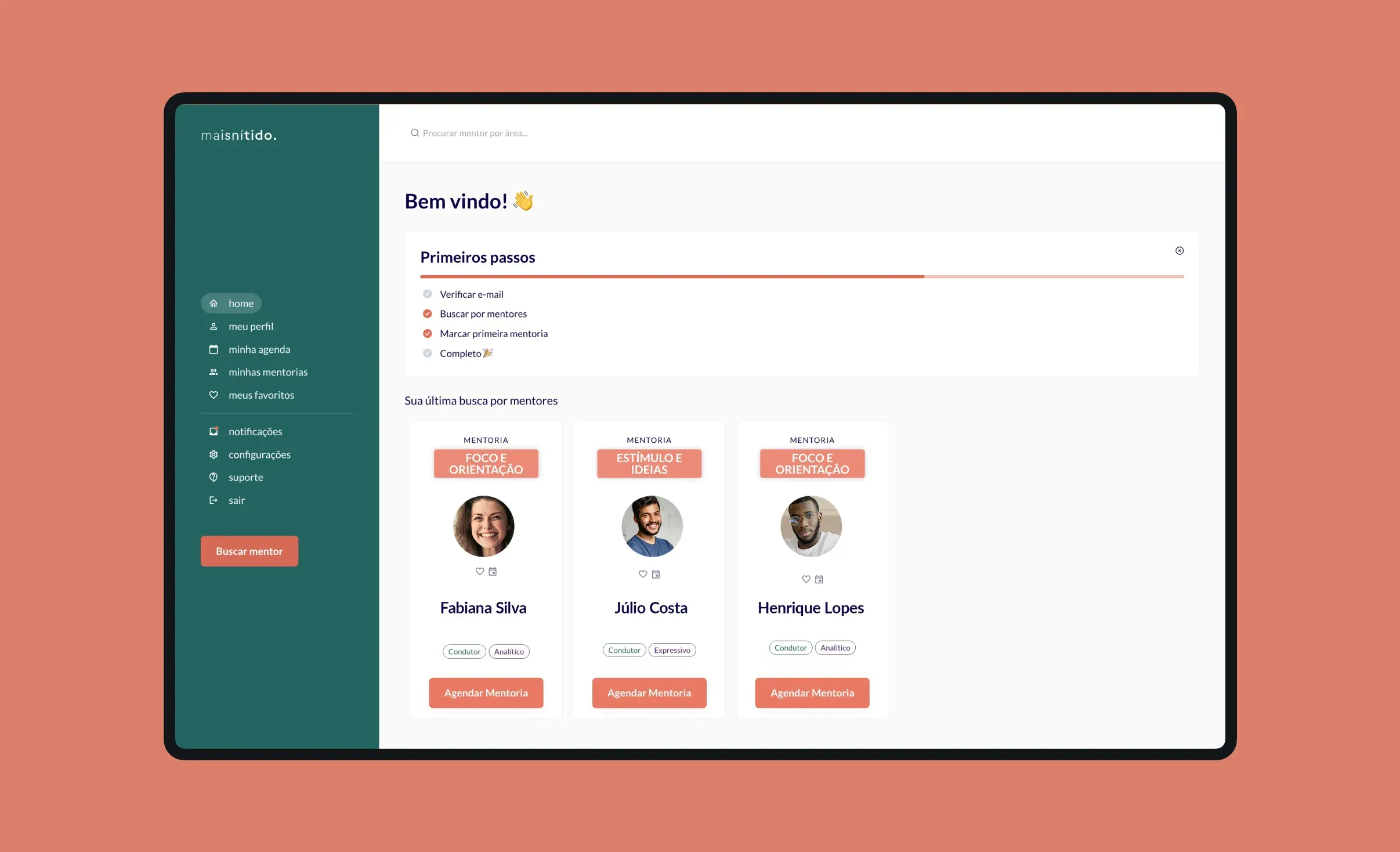
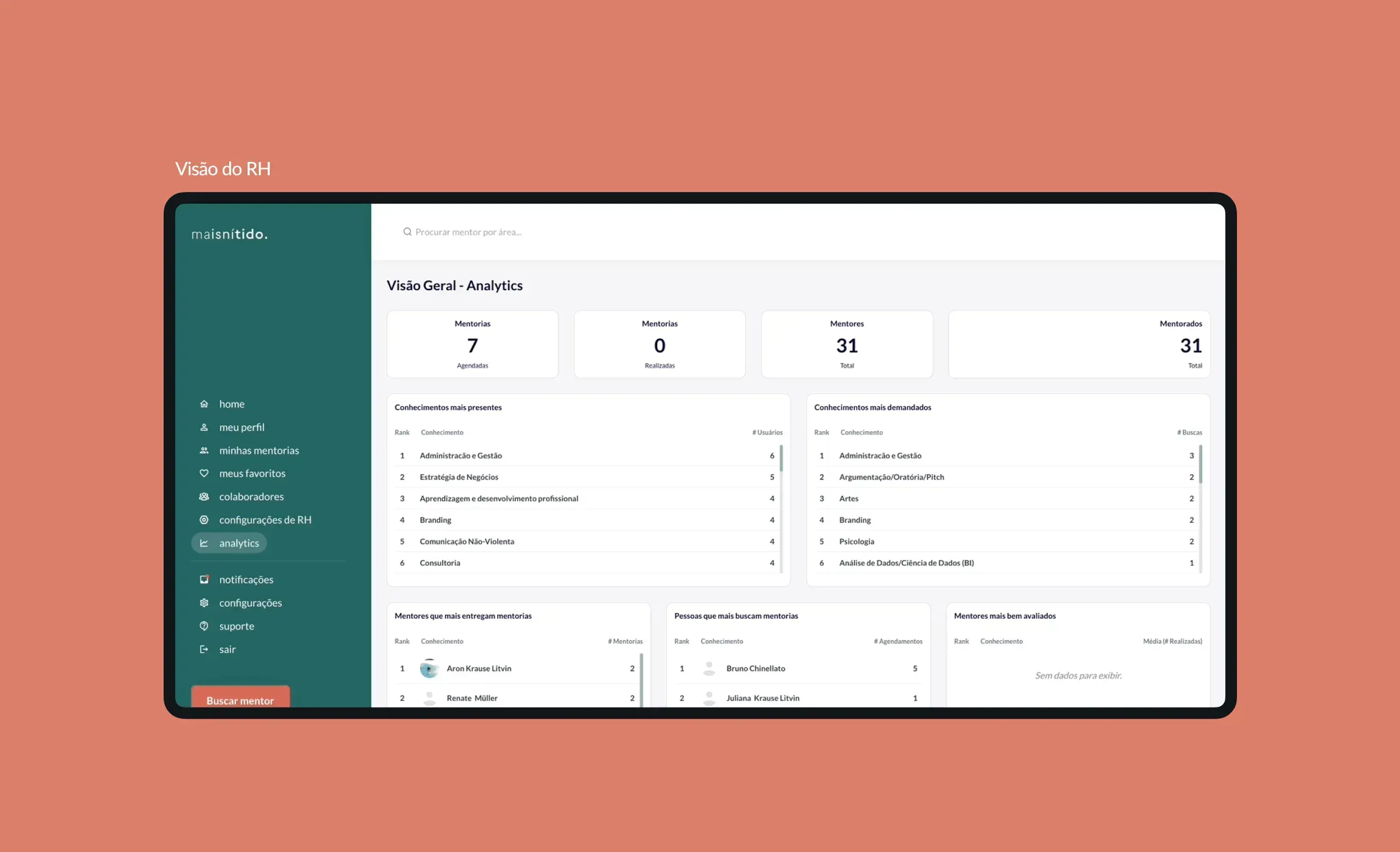
That visibility took the form of a dashboard for HR, covering sessions in progress, who is taking part and which mentors are most requested. It became the value argument for whoever signs the contract, because it presents mentoring as a trackable investment rather than a recurring expense.
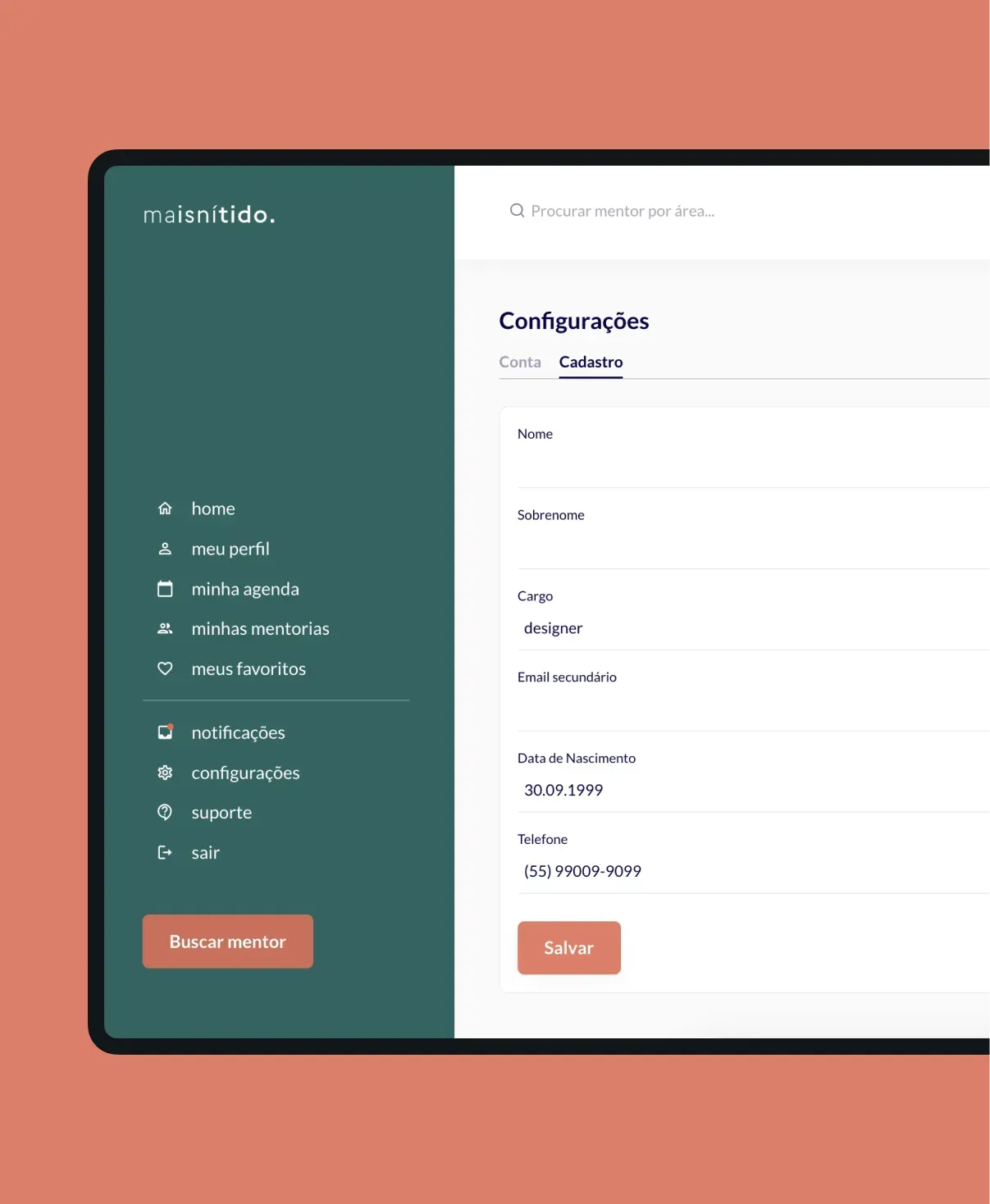
The platform was built with no code tools in partnership with Vistapub. This allowed a small team with no engineering structure of its own to reach the market with a working product rather than a prototype. It also imposed interface constraints, and Vistapub adapted the style guide I had created to fit what the chosen tool could support.
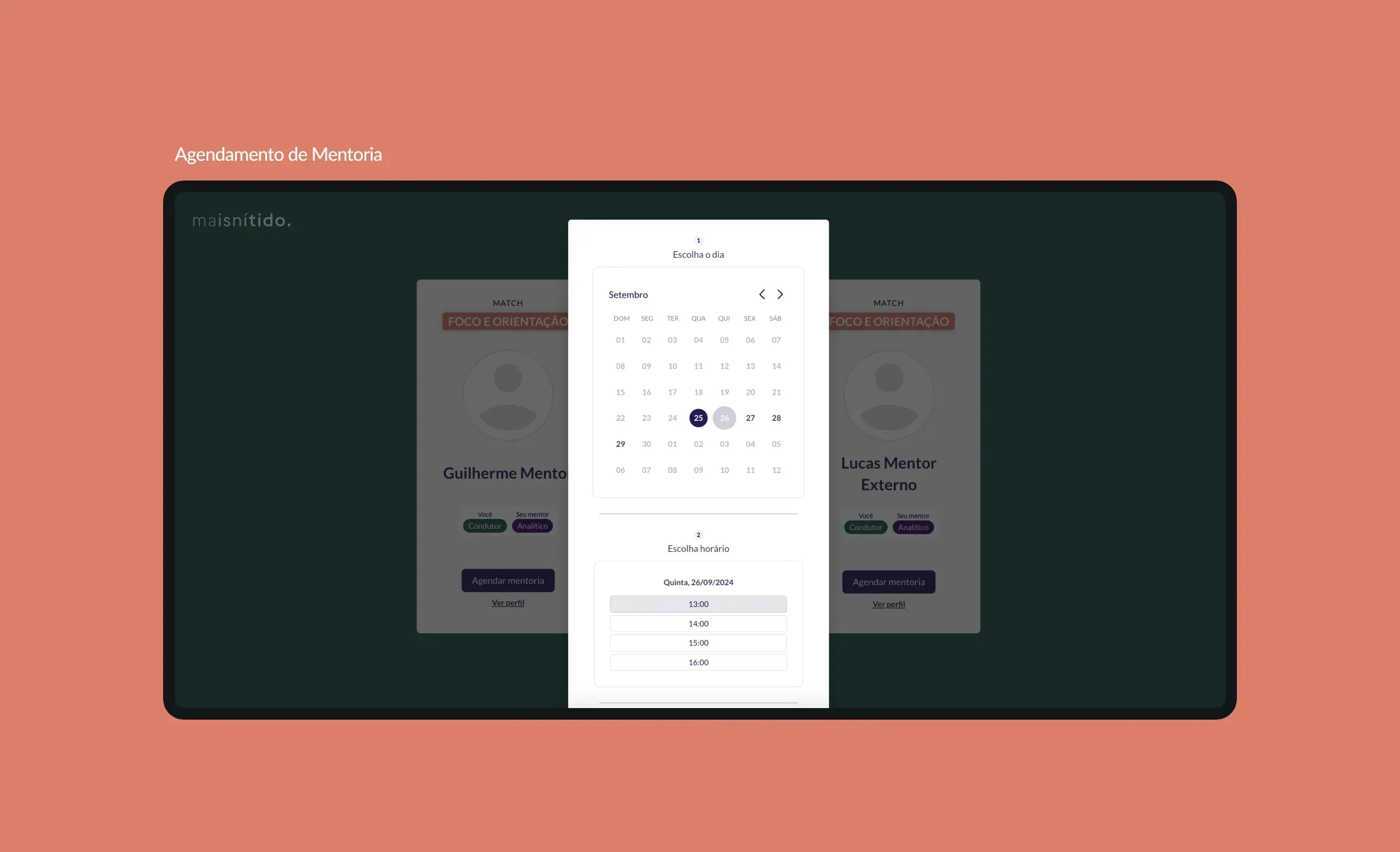
The most demanding change arrived midway through. The business model required a payment mechanism that had not been anticipated in the original scope, and a credit system entered the roadmap without warning. Companies purchase credits through a plan and allocate a quota to each employee, and every mentor carries a credit cost according to their profile. This meant reworking flows that were already designed. Available balance now influenced mentor selection, and employees needed to understand how much they had and what it would give them, without the platform turning into a price list. It was the decision that changed the product most, because it brought the business model into the experience itself.
Results
Mais Nítido launched and is now in use across public sector, private and non profit organisations.
Putting the product into operation raised a challenge the design phase had not anticipated. After launch, the difficulty was no longer usability but sustaining communication and engagement over time, something a well resolved interface cannot guarantee on its own.
The most visible case today is LabCultura.RS, a programme run by the Rio Grande do Sul State Department of Culture in partnership with Universidade Feevale, supporting projects funded by the Paulo Gustavo Act. Since August 2025 the platform has connected cultural producers with around sixty mentors across Brazil, offering five hundred hours of free guidance, with the matching algorithm forming every pair.
Tools
- Google Forms
- Figma
- Miro
The team
- Aron Krause Litvin (Innovation and Strategic Design)
- Clara Celina (Research)
- Daniel Caminha (Founder and Psychologist)
- Gabriela Dall’Agnol (Coordination and Product Design)
- Lucas Weinmann (Vistapub. - No Code Developer & Designer)